Evidence
What the Research Says About a Mediterranean-Style Diet and RA
If you have looked into diet and rheumatoid arthritis, you have probably come across the Mediterranean diet. It appears in magazines, cookbooks and conversations at the doctor's office. But what does the research actually say about it, and how much weight should we put on it? This article walks through the evidence in plain language, including what we do not yet know.
This is general education, not medical advice. Your own diet decisions belong in conversation with your care team.
What people mean by "Mediterranean-style"
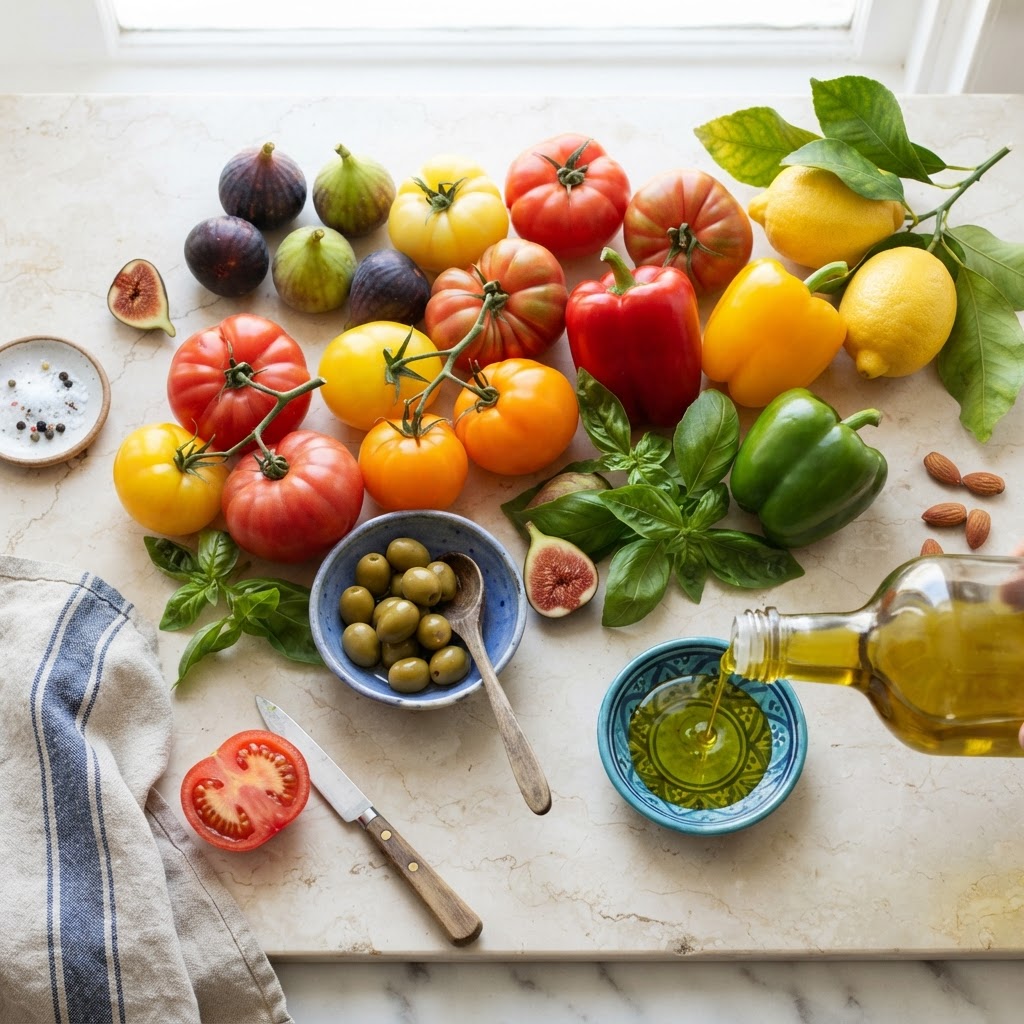
The Mediterranean diet is less a strict plan than a pattern of eating inspired by traditional foods around the Mediterranean Sea. There is no single official version, but most descriptions include:
- Lots of vegetables, fruit, beans, lentils, nuts and whole grains
- Olive oil as the main added fat
- Fish and seafood regularly
- Moderate amounts of poultry, eggs and dairy such as yogurt and cheese
- Little red meat, sweets and highly processed foods
- Herbs and spices in place of heavy salt and sauces
Notice what is missing from that list: strict rules, forbidden foods and calorie counting. It is a flexible pattern, which is one reason people find it easier to maintain than a short-term diet.
What the guideline says
In 2022, the American College of Rheumatology published a guideline covering exercise, rehabilitation, diet and other approaches for adults with rheumatoid arthritis and osteoarthritis. For diet, the panel made a conditional recommendation for a Mediterranean-style diet for people with rheumatoid arthritis.
Two words in that sentence matter a great deal.
"Conditional"
In guideline language, a conditional recommendation means the panel believes the benefits probably outweigh the risks, but the decision depends on a person's circumstances, preferences and values. It is a softer statement than a "strong" recommendation. In plain terms: it is a reasonable option, not a requirement.
"Mediterranean-style"
The guideline refers to a pattern, not a precise menu. It does not say that any single food helps, and it does not prescribe amounts.
The panel also noted that the quality of the supporting evidence was low. That does not mean the diet is harmful. It means that the studies available are limited, so we should hold the conclusion loosely.
What the research tends to look like
Research on diet and rheumatoid arthritis has several characteristics worth understanding.
- Studies are often small. Many trials include a limited number of participants, which makes results less certain.
- They are often short. Following people for a few weeks or months cannot tell us much about long-term effects.
- Outcomes vary. Some studies measure pain, some measure disease activity scores, and some measure blood markers. They do not all line up.
- It is hard to blind a diet. In a drug trial, participants can receive a placebo. With food, people know what they are eating, which can influence how they report symptoms.
- Medication is usually continuing. Most participants take their prescribed treatments, so it can be hard to separate the effect of diet from the effect of medication.
Some studies suggest that people following a Mediterranean-style pattern may report modest improvements in measures such as pain or disease activity. Others find little difference. Taken together, the picture is encouraging but not conclusive.
Why it may still be a sensible choice
Even with limited evidence for rheumatoid arthritis specifically, there are practical reasons many clinicians are comfortable with this eating pattern.
- Heart health. People with rheumatoid arthritis have a higher risk of cardiovascular disease, and the Mediterranean pattern has a good track record in research on heart health in the general population.
- Low risk. For most people, eating more vegetables, beans, fish and olive oil is unlikely to cause harm.
- Nutritional variety. It emphasizes a wide range of foods rather than eliminating groups.
- Sustainability. Because it is flexible and enjoyable, people tend to keep it up.
- Weight support. If a person's care team has advised managing weight, this pattern can fit that goal, since excess weight puts additional load on joints.
These are reasons to consider the pattern as part of overall health, not promises that it will change your arthritis.
What the research does not show
It is just as important to be clear about the limits.
- It does not cure rheumatoid arthritis. No diet does.
- It is not a replacement for medication. Disease-modifying treatment remains the foundation of care, and stopping or changing it should only happen with your rheumatologist.
- It does not guarantee less pain. Some people notice a difference, and others do not.
- It does not identify trigger foods. The pattern is general and does not tell you what to avoid individually.
- It has not been proven better than other healthy patterns. Other balanced diets may be just as reasonable.
Practical ways to move toward this pattern
You do not need to overhaul everything at once. Small, steady changes are easier to maintain, and each one is useful on its own.
Start with what you already enjoy
Look at the meals you already like and see which fit. A tomato and white bean salad, grilled fish with lemon, hummus with vegetables and roasted chicken with potatoes are all Mediterranean-style foods you may already cook.
Make olive oil your default
Swap butter or other cooking fats for olive oil where it makes sense. Use it to roast vegetables, dress salads and finish soups.
Add fish, not stress
Aim for fish a couple of times a week if you like it. Canned sardines, salmon and tuna are affordable and easy to keep in the pantry. Fresh fish keeps for only a short time, so cook it early in the week.
Bring in beans and lentils
Canned beans need no cooking and work in salads, soups and wraps. Lentils cook in about 20 minutes with no soaking.
Let vegetables take up more of the plate
Try filling half your plate with vegetables. Frozen vegetables are just as reasonable as fresh ones, and they cut down on prep.
Choose whole grains when you can
Brown rice, farro, oats and whole wheat bread are all good options. Pre-cooked grain pouches are convenient if energy is limited.
Fitting it into real life with RA
Cooking regularly can be tiring when you are living with joint pain and fatigue. That is where meal prep helps. Batch-cooking a few components once a week means that eating this way requires less effort on most days. Pre-cut vegetables, canned beans and rotisserie chicken are all perfectly sensible ways to keep the pattern achievable.
Other considerations matter too:
- Medication interactions. Some people take medications that interact with particular foods or alcohol. Ask your pharmacist if you are unsure.
- Allergies and intolerances. Adjust the pattern to what your body tolerates. Substitute freely.
- Budget. Beans, lentils, canned fish, frozen vegetables and seasonal produce keep costs down.
- Cultural food traditions. Mediterranean-style is a pattern, not a cuisine you must adopt. Foods from your own culture that are rich in vegetables, legumes and whole grains fit the spirit of it.
Questions to bring to your care team
If you want to explore this approach, a conversation with your care team is a good starting point. You might ask:
- Is a Mediterranean-style eating pattern appropriate for me, given my medications and health history?
- Would you recommend seeing a registered dietitian?
- Are there foods or supplements I should avoid with my current treatment?
- How should I track whether changes are making a difference?
A registered dietitian can tailor the pattern to your preferences, budget and health needs, which no general article can do.
The bottom line
The research on a Mediterranean-style diet and rheumatoid arthritis is promising but limited. The American College of Rheumatology gives it a conditional recommendation, which means it is a reasonable option, backed by low-quality evidence, to be decided with your own circumstances in mind. It is not a cure and not a substitute for treatment. It may, however, be a pleasant, flexible and heart-friendly way to eat that fits comfortably alongside your medical care.
This article is general education and is not medical advice. Talk with your rheumatologist or a registered dietitian before making changes to your diet.
A sample day of eating in this style
Examples can make a pattern feel real. This is one possible day, not a prescription, and portions should fit your own needs.
- Breakfast: Plain yogurt with oats, berries, chopped walnuts and a drizzle of honey.
- Lunch: A grain bowl with farro, chickpeas, cucumber, tomatoes, olives and a lemon-olive oil dressing.
- Snack: An apple with almond butter, or a small handful of nuts.
- Dinner: Baked salmon with roasted vegetables and a side of whole grain bread dipped in olive oil.
On another day, breakfast might be eggs with sauteed spinach and tomatoes, lunch a lentil soup with a side salad, and dinner a sheet-pan chicken with potatoes and green beans. Nothing here is exotic, and most of it can be prepared ahead.
Common questions
Do I have to give up foods I love? No. The pattern focuses on what to add and emphasize, not on strict prohibition. Occasional treats fit comfortably.
Is wine part of it? Traditional descriptions sometimes include moderate wine with meals. Alcohol can interact with certain arthritis medications, so please ask your rheumatologist or pharmacist before including it. It is entirely optional.
What about people who do not eat fish? You can emphasize beans, nuts, seeds and other foods in the pattern. Ask a registered dietitian about alternatives if you want to make sure you are covered.
How long before I notice anything? There is no reliable timeline. Some people notice changes in energy or digestion within weeks, and others notice nothing specific. Judge it by how it fits into your life as much as by symptoms.
Is it expensive? It can be gentle on a budget when you lean on beans, lentils, canned fish, frozen vegetables, oats and seasonal produce.
Keeping expectations realistic
The most useful mindset is curiosity without pressure. If you try this way of eating and enjoy it, that is a good outcome in itself. If your symptoms do not change, that does not mean you did anything wrong. Rheumatoid arthritis is complex, and food is one small piece of a much larger picture that includes medication, movement, rest, sleep and emotional support.
Amazon links in this post may be affiliate links. General information only, not medical advice.
The book
The Mediterranean Meal Prep Guide for Living with Rheumatoid Arthritis
By Jerred Franklin
Coming soon